Our Model
Ouyouna brings vision care into the spaces where life already happens. By equipping communities with accessible screening technology and connecting those who need follow-up to medical professionals, we build a continuous pathway from early detection to treatment.
Four steps. One connected pathway to care.
Care begins with the community.
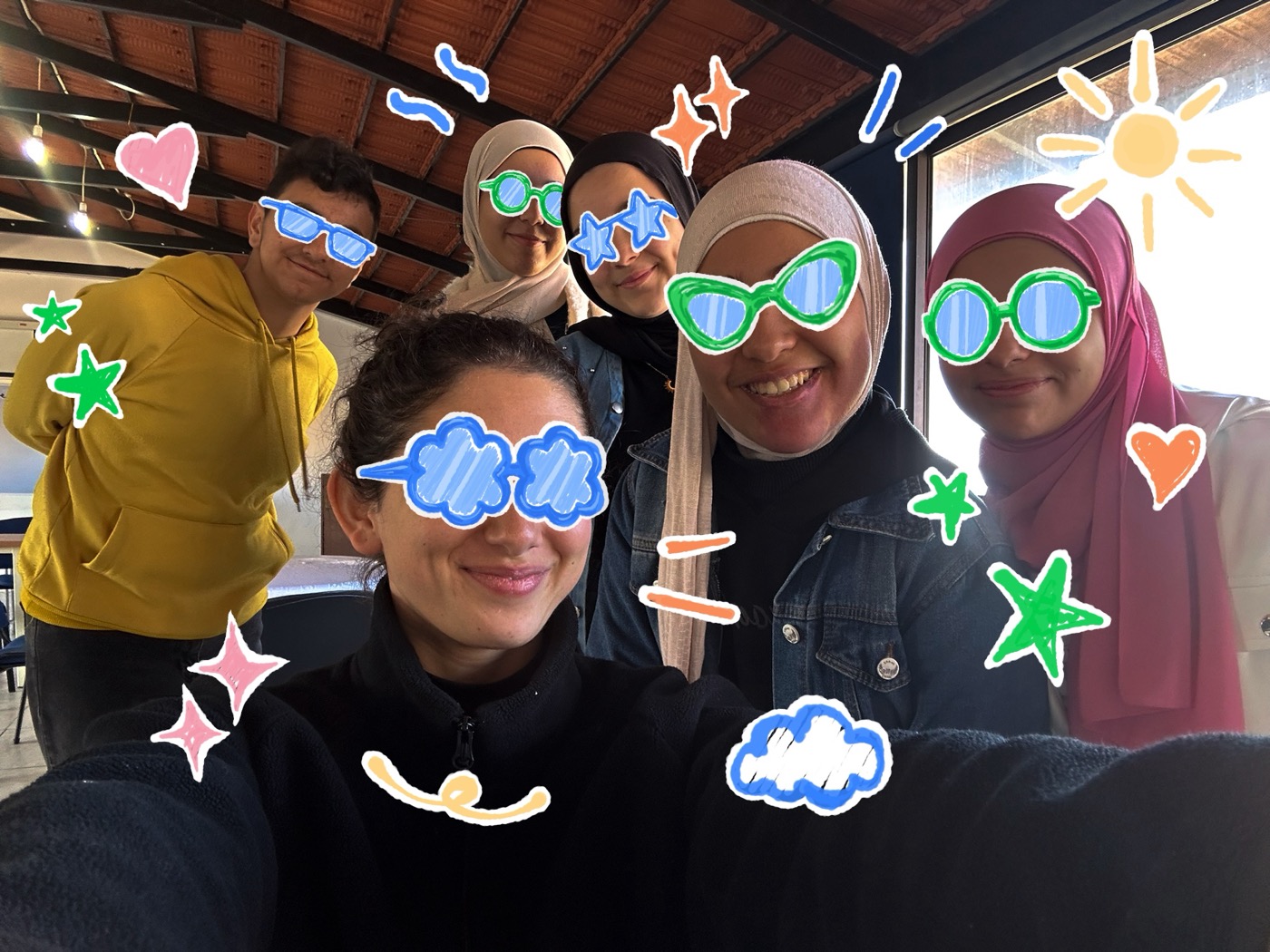
Ouyouna begins by training the people already embedded in the communities we serve. Through structured workshops, public-school teachers and local volunteers learn to conduct vision screenings using PocDoc, a validated digital visual acuity tool designed for use by trained non-medical personnel.
Training goes beyond learning how to operate the software. Participants are introduced to fundamental principles of vision screening, standardized testing procedures, patient consent, data privacy, and the importance of identifying children who require further examination.
Each session combines practical instruction with supervised, hands-on experience, equipping participants to confidently administer screenings in their own schools.
By transferring this capability to trusted community members, Ouyouna transforms ordinary classrooms into accessible points of preventive care, reducing reliance on external medical teams for every screening deployment.
We don't just bring screenings into communities. We give communities the tools to conduct them.
Early detection, brought closer to home.
Once trained, community members bring vision screening directly into schools and other familiar spaces, eliminating the need for every child to travel to a clinic for an initial assessment.
Using PocDoc, participants conduct standardized visual acuity screenings, testing each eye individually and securely recording the results. The process is designed to be accessible, efficient, and reproducible, requiring minimal equipment.
Each screening creates a digital record that enables Ouyouna's coordination team to identify individuals who may require further examination.
The goal is simple: make identifying a vision problem easier than overlooking one.
A screening only matters if it leads somewhere.
When a child is flagged for further assessment, Ouyouna's coordination team reviews the screening results and connects the family with its medical referral network.
Parents receive clear instructions and assistance accessing a free comprehensive eye examination. Through coordinated scheduling, communication, transportation information, and follow-up, we work to reduce the logistical and financial barriers that can prevent families from accessing care.
The referral pathway is tracked from the initial screening through the clinical visit, ensuring that identifying a potential problem is only the beginning of the process.
We don't leave families with a referral. We help them reach care.
Because identifying the problem is not the solution.
Children referred through Ouyouna receive comprehensive examinations through our clinical network, where qualified eye-care professionals determine the appropriate next steps.
For some, this means a pair of prescription glasses. For others, it means further medical assessment, treatment, or specialist intervention.
Ouyouna works with its partners to make these services accessible without placing the financial burden on participating families.
Our responsibility extends beyond identifying visual impairment. It is about connecting each person with the care needed to address it.
From the first screening to clearer sight, every step matters.
One model. Built to belong.
In communities,
by communities.
Care is strongest when it comes from within.
Ouyouna trains the people communities already trust — teachers, older students, local volunteers, and community coordinators — to deliver vision screenings in the spaces they know best.
With accessible technology and standardized training, we're building a network that doesn't depend on visiting medical teams to reach every child.
The goal isn't simply to bring vision care into a community. It's to leave behind the people, tools, and knowledge to keep it going.
We don't just deliver care. We build the capacity for it to stay.